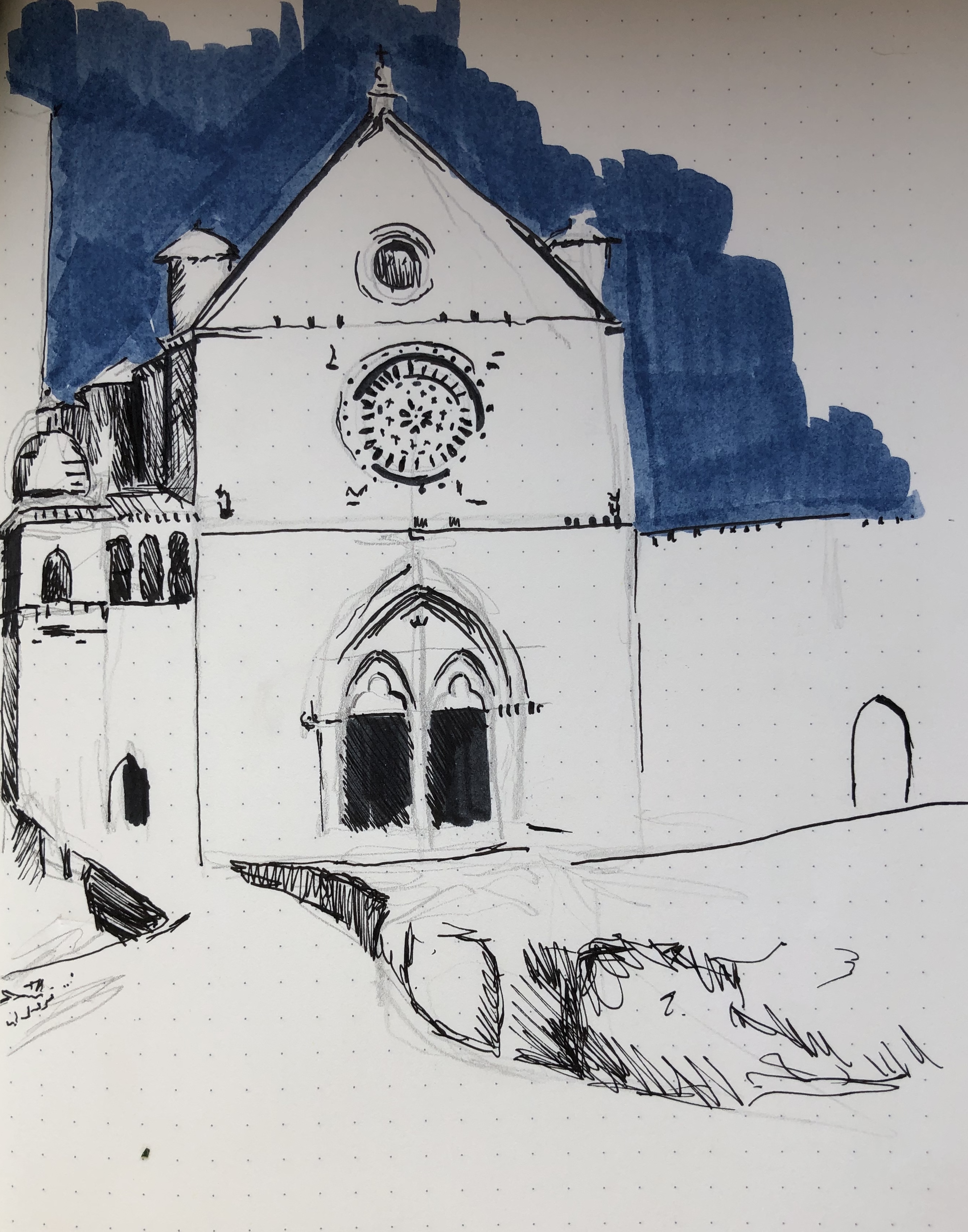
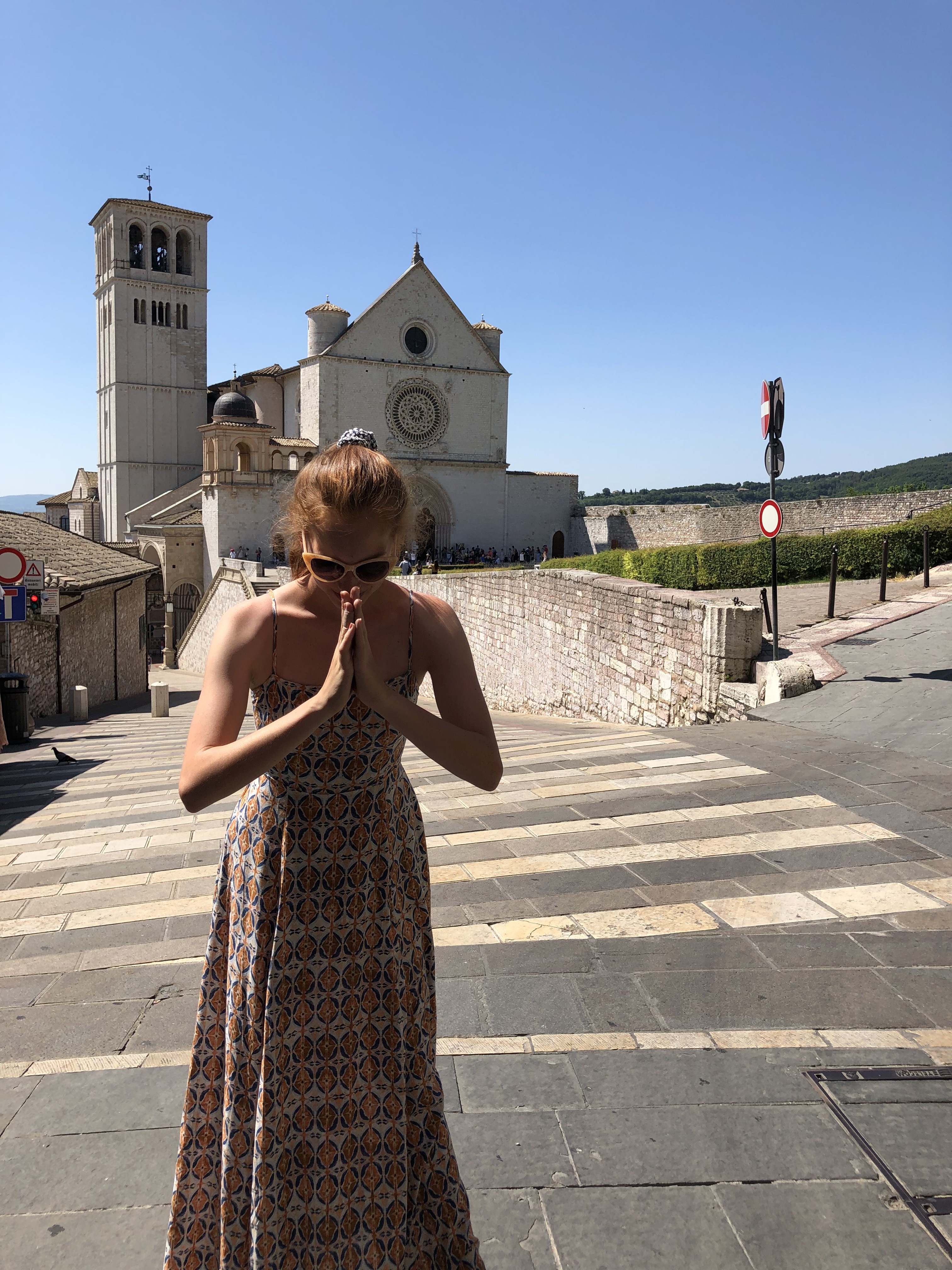
We rode the heatwave from Sansepolcro to Assisi. Our day in Assisi began with a visit to the Basilica of San Francesco. The sun was pounding on us as we marched up the hills to the church. Getting to see the high and low churches, “Giotto’s” frescoes of the Life of Saint Francis, and Saint Francis’ tomb was different than I had expected. I didn’t expect the low church to be as ornate as the high church, and I was surprised at how many tourist groups were there. The church looks larger in photos, and I was expecting the nave to be much longer than it was. My head hurt from arching my neck to view all of the frescoes along the ceilings! The tomb of Saint Francis was very crowded, not the actual tomb, but the room around it. I saw a box entitled “Letters to Francis” where people could write to him like Juliette up in Verona, and that made me cringe. I just wasn’t getting the ~spiritual vibes~ there. It wasn’t until Santa Chiara that I had a spiritual experience.
La Basilica di Santa Chiara, built of majestic pink and white stone bands, faces The Basilica of Saint Francis which is located on the other side of Assisi. Before the Basilica of Santa Chiara was built, the Church of Saint Giorgio was on that land, and that is where Saint Francis was originally buried in 1226. A very important piece of art that is housed in Santa Chiara is the Byzantine Crucifix that St. Francis prayed to. In an article about the Basilica’s history from sanfrancescoassisi, it is said that when the Clarissa’s moved in to the Basilica from San Damiano, they brought the Crucifix with them, and that is why it is so well preserved today. Grazie Clarissas.
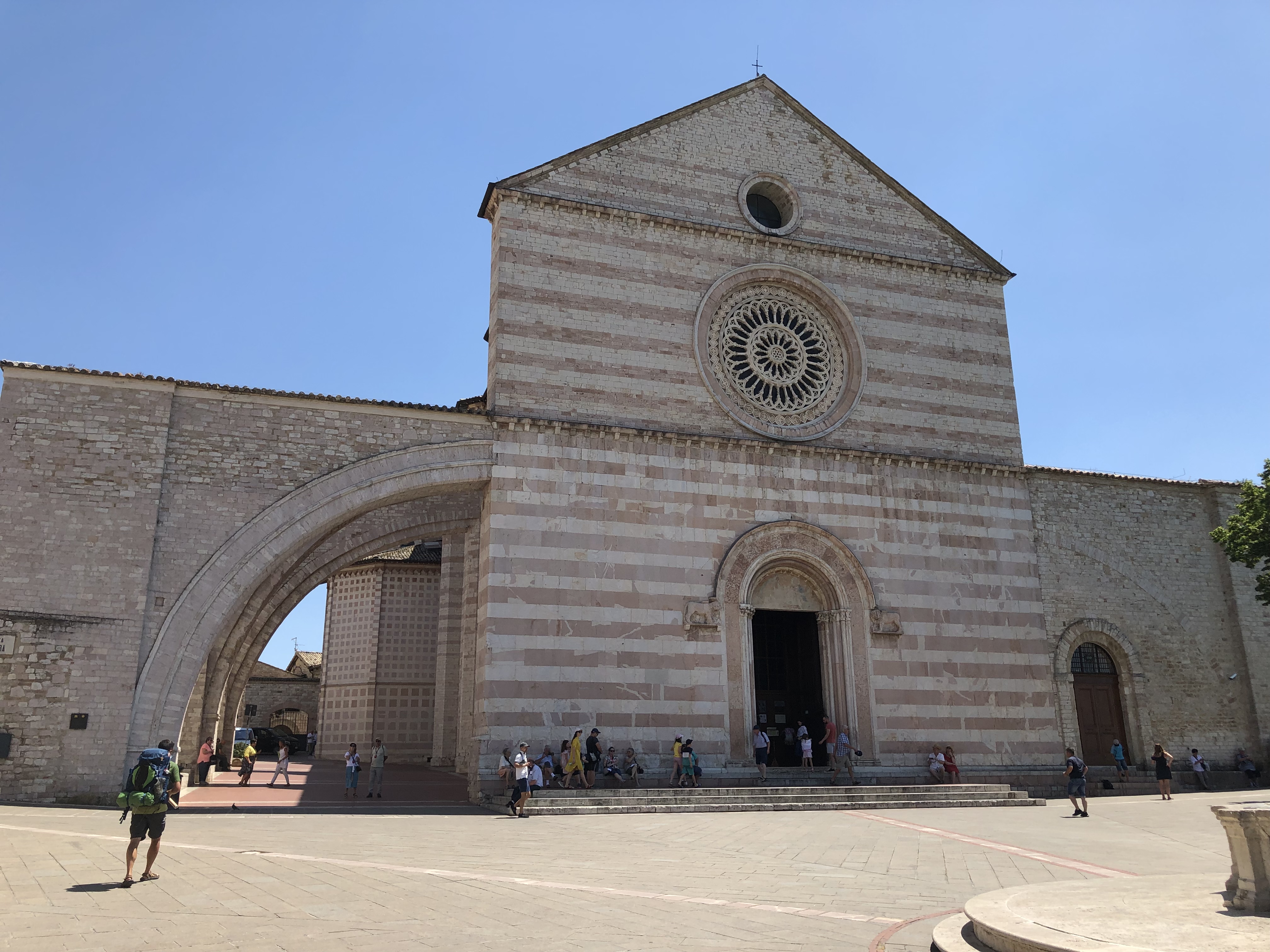
The exterior of Santa Chiara is simple, similar to the exterior of the Basilica of San Francesco. The pink and white stone stripes are limestone from Subasio. There is one rose window on the facade, and on cathopedia the three orders of the church are described as “flying buttresses”, which weren’t added until 1351.
The structure of the Basilica’s interior consists of one nave, and two chapels that spread sideways. On assisisantachiara, the apse of the nave is described as polygonal, similar to the upper church of San Francesco. The two chapels are called Sant’Agnese d’Assisi and San Giorgio, and the chapel of San Giorgio is where the Crucifix is now located, with several frescoes from the 1340s located behind it. At the main altar there is a shaped cross, and in the left transept there are lunettes of the old testament, a “table with the life of Saint Chiara”, and Giotto’s nativity fresco. We noticed that many of the frescoes around the altar were gone, or had peeled away. According to assisisiantachiara, the crypt downstairs was not built until the 1850s, which is when Saint Clare’s body was found. Then the crypt was renovated in 1935, in a Neo-Gothic style.
Santa Chiara was the highlight of Assisi for me, and I almost can’t believe the experience I had in the San Giorgio chapel. We didn’t walk in there until after we viewed the crypt, which was slightly odd, and saw the remains of the altar frescoes. When I stepped into the chapel it became silent, and a large group had just left and the front pughs had opened up. Sometimes I get anxious about where to stand or be in museum settings, but my feet guided me to a seat in the front row. I became entranced by the Crucifix, and how simple and delicate it was. Thank God the Christ figure didn’t have those weird balloon abs that I saw on many of the Crucifixes in the Uffizi. Saint Francis had good taste. I could identify the beauty and meaning he found in the Crucifix, and I thought about how Francis would feel about the basilica down the street in his honor. My final consensus was that he would have loved the church from an artistic standpoint, but despised it from the religious one. There is no way to truly know how he felt, but it’s fun to think about.
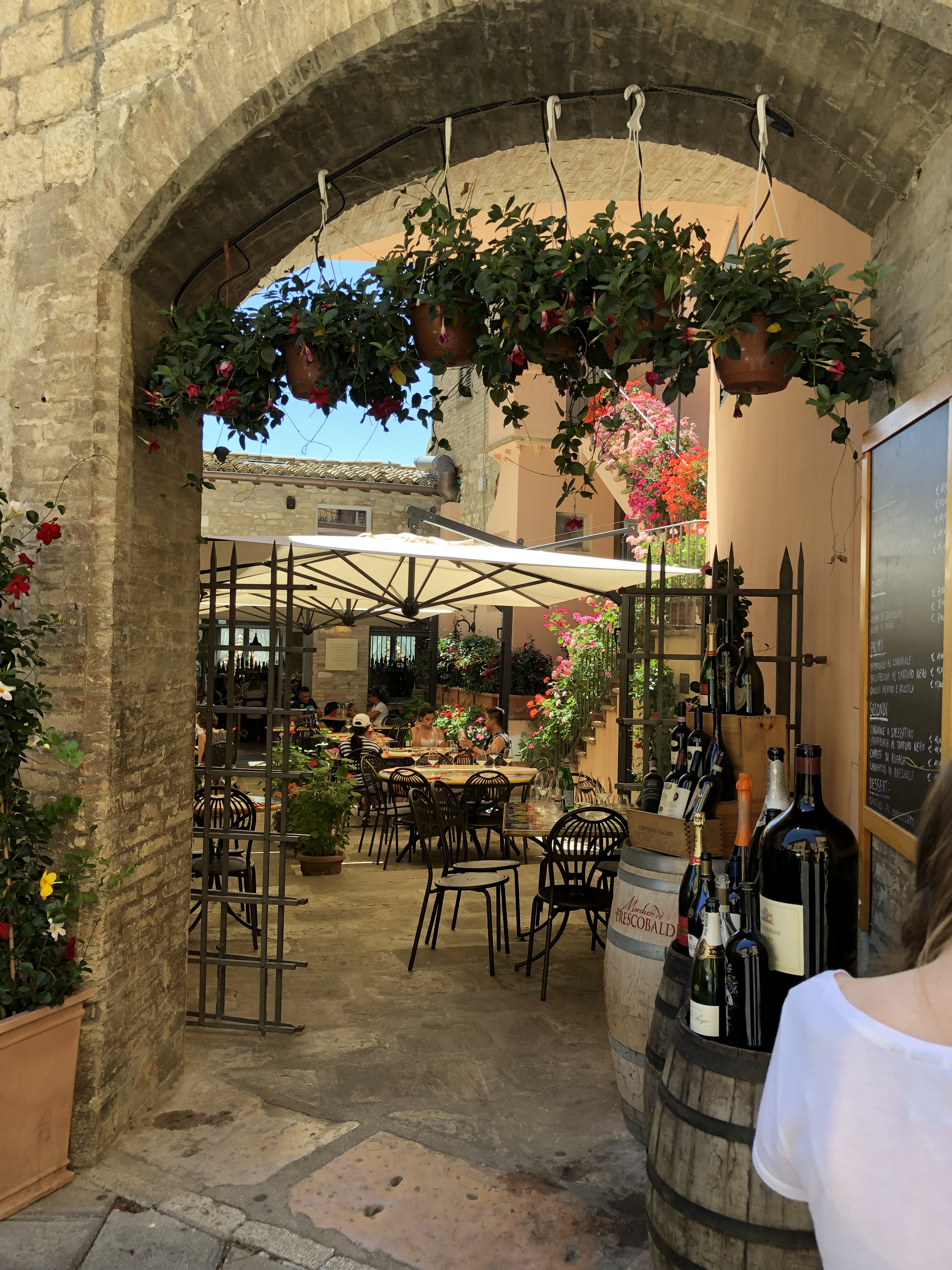
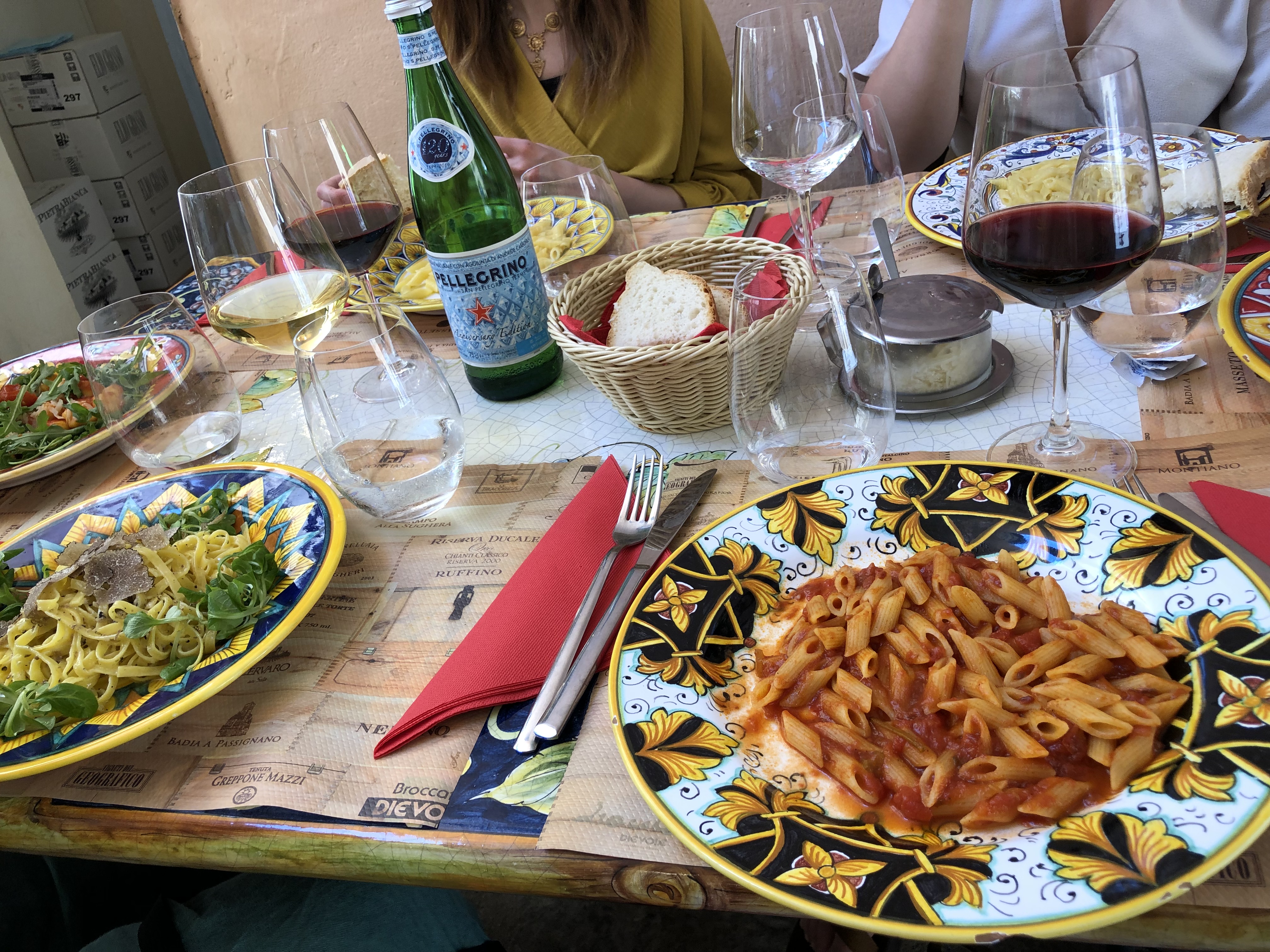
We finished our day in Assisi with lunch in a little outside garden of a restaurant that specializes in wine and olive oil. I messed up when ordering my wine. It’s not my fault that this is the only restaurant that had Amarone or Barolo I have found on the whole trip, even though we were in Umbria. The waitress pressured me into ordering an Umbrian wine, which was still very good. Also, I didn’t realize only one person at the table tastes the wine before it is served, oops! Mi dispiace. After lunch we strolled through the Temple of Minerva, a Roman Temple turned Baroque house of the Lord, and then saw the Roman Forum and walked along the streets of Assisi from the days of the Roman Empire. The street level of Assisi used to be a lot lower, but I am sure the hills were just as steep.
It was an excellent day in Assisi, but my poor calves were happy to return to Sansepolcro.
 Caroline's Blog