
In our daily lives it is easy to reach for a salt shaker, or maybe grind some sea salt if you are feeling fancy. If you live down south like I do, you might have rice in your salt shaker to keep your salt from clumping due to humidity. The easy access to salt and the way it is displayed has not always been like it is today. In the past salt had a different worth, and there were special, beautiful devices for storing salt.
It’s important to trace back salt’s history in Italy. During the period of Phoenician rule, beginning in the ninth century BCE, the Phoenicians controlled many southern, coastal Italian countries. Since agriculture was difficult in these places, salt production was very popular, especially in Sicily and Sardinia. Salt could be used to preserve foods and to elevate the worth of a dish. After all salt in Latin is sale, which is what the word salary was derived from. Saltpans and salt evaporation techniques are still in practice today in these areas of Italy and the mediterranean. Moving into the Renaissance and early modern time periods in Europe, salt became taxed. Salt was a symbol of wealth, and was a rare commodity.

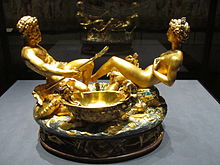
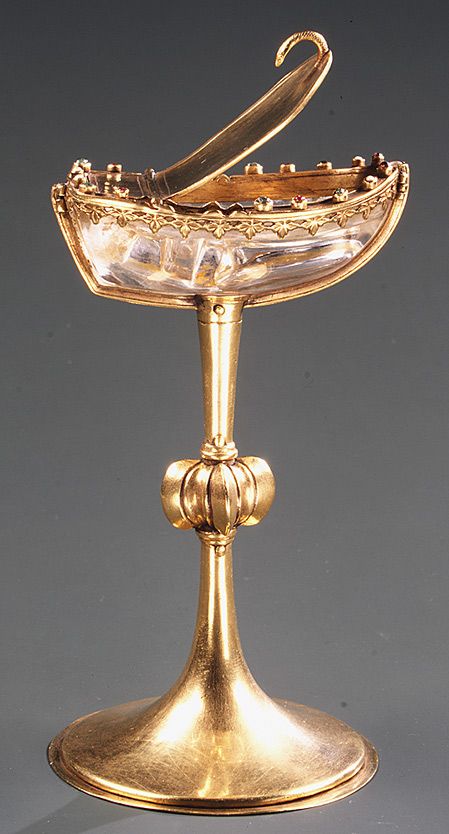
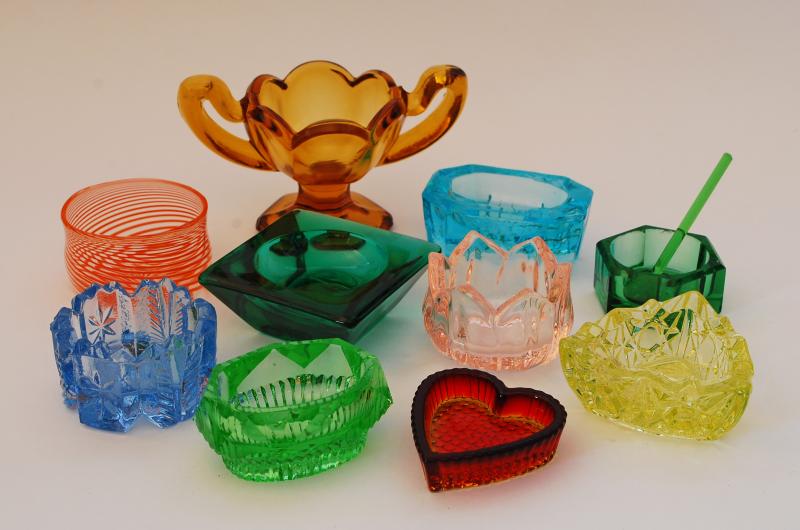
Since salt was in large blocks or quadrants up until the 19th century, salt was stored in salt cellars or salt trenchers. Salt cellars were shared between the whole table while salt trenchers were in multiples for all of the guests. These salt storage devices were delicately grand, paying close attention to detail. My favorite salt cellar was sculpted by the Italian artist Benvenuto Cellini. His Salt Cellar of King Francis I of France, was made with gold and enamel and features Neptune (the god of the seas) and the Goddess of Earth intertwined in the middle to represent earth meeting the sea. Salt is placed in the boat on one side and pepper can be stored in the archway on the other side. Around the bottom of the saltcellar, Cellini portrays the different eating schedules and seasons through symbolism. His salt cellar is very ornamental, which began to go out of style when banquets were traded in for more intimate meals. Many of the more modern salt cellars commonly had the salt stored in a boat still, but were not at the Cellini level of ornate. Eventually salt cellars became common in homes, usually made out of glass.
In the 19th century salt became more refined and could be manufactured not to clump as much, leading to the invention of the salt shaker that we see today! Hopefully you learned something new about the history of how salt is stored. I know I did, and now I am on the hunt for a vintage salt cellar. You can buy salt cellars today at kitchen stores, but they are made out of acacia wood and don’t have the ornate flair of the salt cellars from the past.
 Caroline's Blog