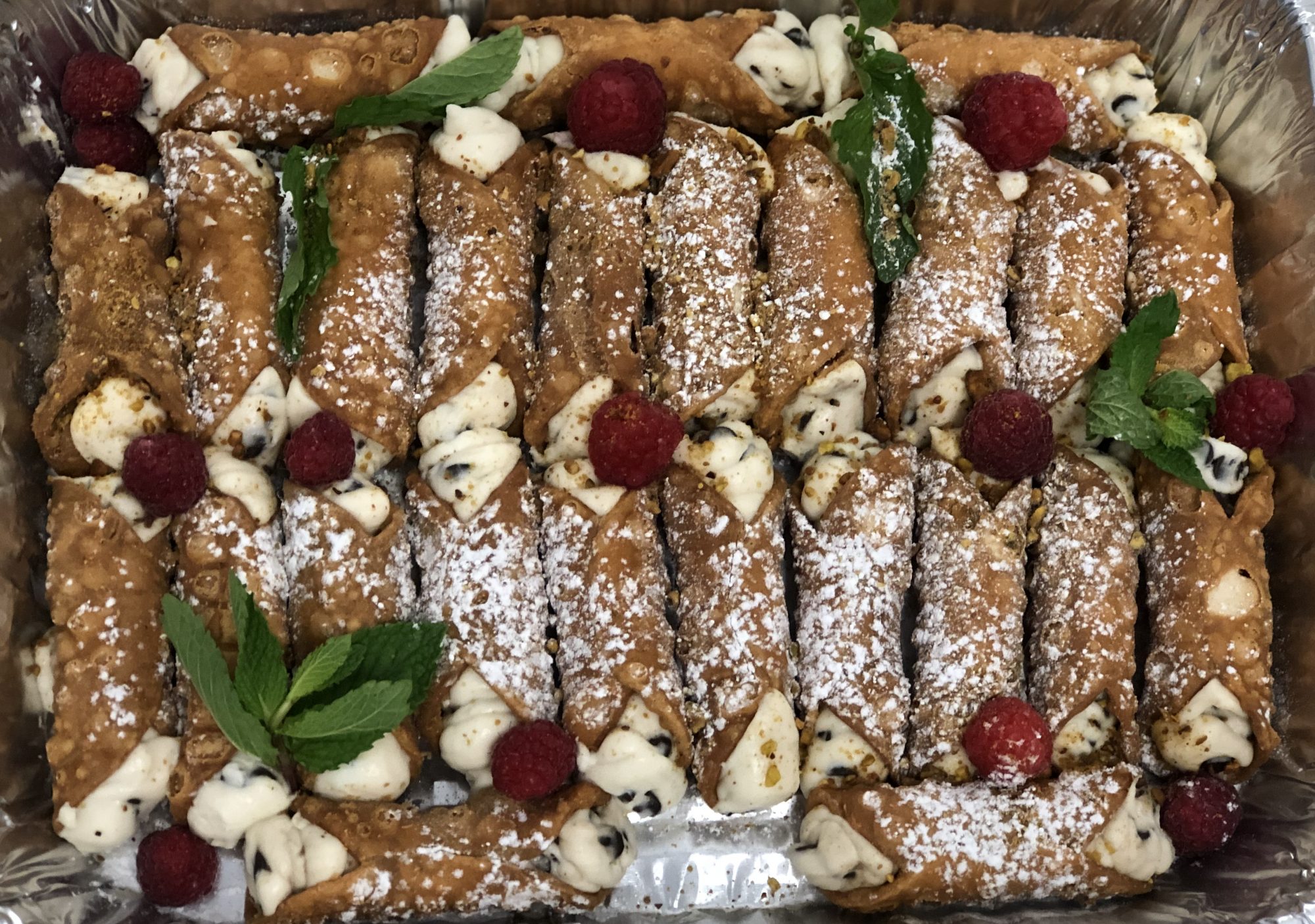
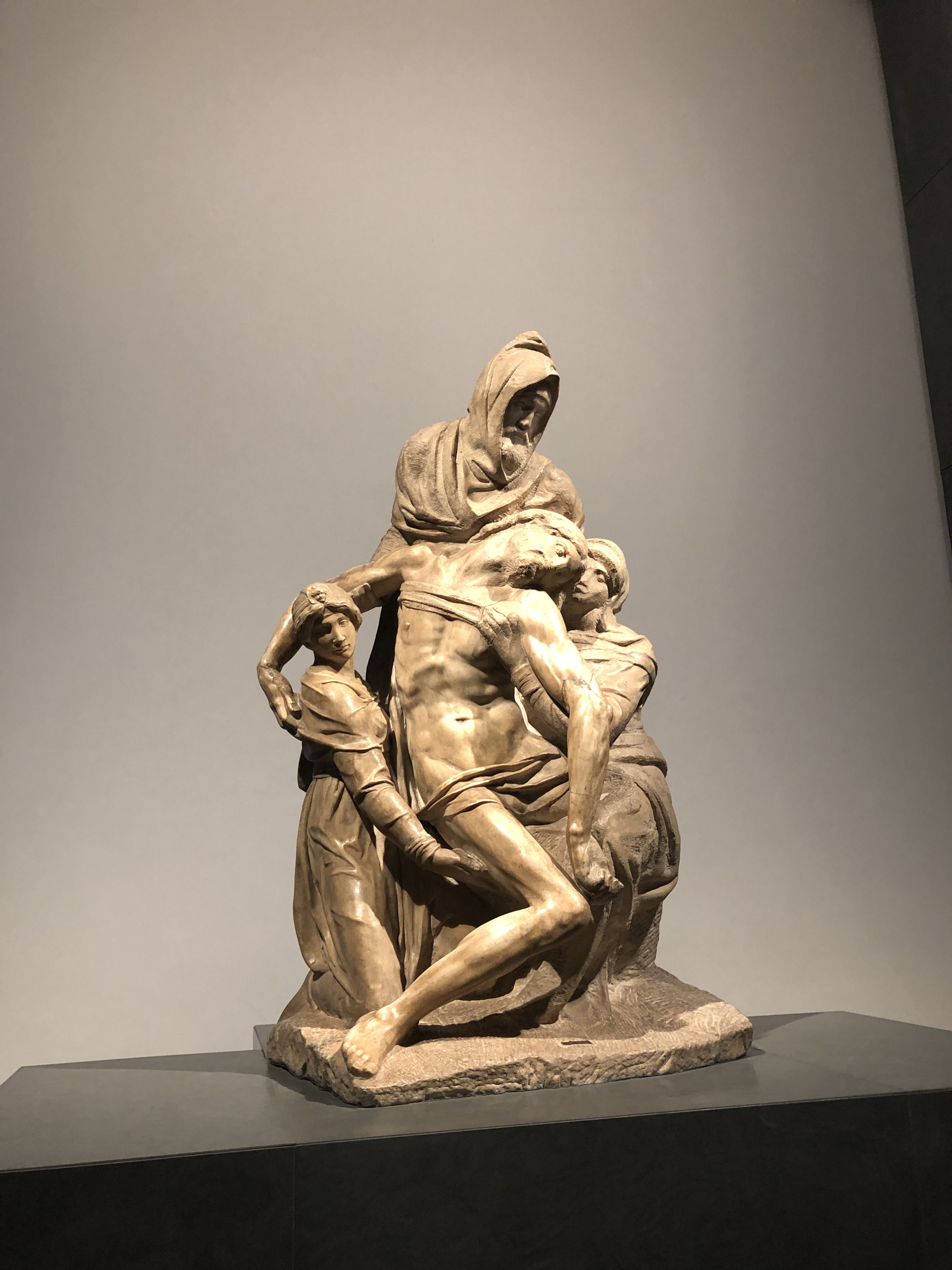
On il 10 Giugno my Meredith classmates and I headed off to Firenze for un giorno. We woke up early to catch the autobus to the Arezzo stazione, picked our train to Firenze, and were on our way. A bumpy ride through the Tuscan hills suddenly turned into the bustling piazza of Santa Maria Novella. Since we traveled to Firenze on Lunedi, many of the museums and galleries were closed. Che picato, what a shame, but luckily some locations were opened and I was forced to narrow down my options. As a class we went to the Museo dell’Opera di Duomo, and I researched two other sights to see on my day in Firenze.
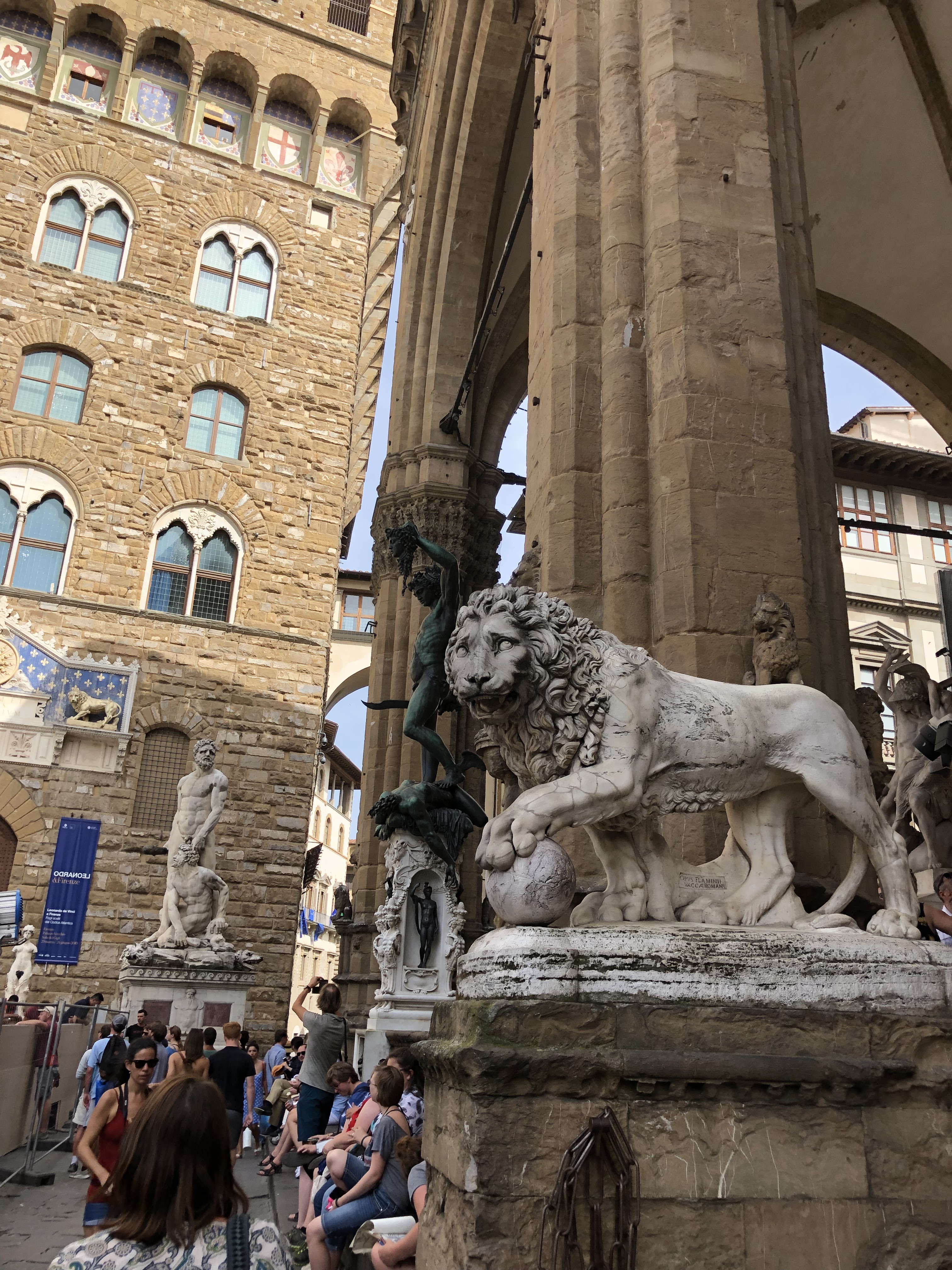
In honor of my studies during Art History Survey 2, I visited the Loggia dei Lanzi and saw Giambologna’s “Rape of the Sabine Women”. The Loggia dei Lanzi is located in Piazza della Signoria, and it’s name means “open air sculpture gallery”. The Loggia has been around since 1392, and building began in 1376 by Benci di Cione and Simone Talenti. The gorgeous arches and open shape of the Loggia is in the Gothic Architectural style, which was prominent right before the Renaissance. It was originally used to hold public ceremonies and functions of the Florentine Republic. During the sixteenth century it was no surprise that the Medici’s got their hands on the Loggia, but the sculptures weren’t installed until they were expelled from Florence. Once the Medici came back to Florence, Cosimo added to the collection. Before arriving at the Loggia dei Lanzi, you are greeted by the lions on the staircase leading up to the sculptures. Now that I know lions are the symbol of Florence, I understand the powerful meaning the Marzocca’s hold. There are many famous sculptures in the Loggia other than “Rape of the Sabine Women”, there is a bronze statue by Cellini, which is “Perseus with the Head of Medusa”, the five marble statues of women, and Latin inscriptions that mark the dates of Italian unification and the adoption of the common calendar.
I am usually a museo person, but I wanted to see Santa Croce. In 1210 the first groups of Franciscan friars settled in Florence on the site where Santa Croce was eventually built in 1295. The original builder of the Basilica was Arnolfo di Cambio. The plan of the church is in the shape of an Egyptian cross, which makes sense for the Holy Cross. The Florentine gothic style facade of Santa Croce transports you back in time, but sadly in a time machine of lies. The facade of Santa Croce wasn’t designed until 1863 by Niccolo Matas. Once you enter the church there is an abundance of art works. The nave is spacious, has arches pointing to the heavens, and thin stained glass windows that bring in slivers of light. Santa Croce is filled with frescoes by many famous artists who were commissioned to paint the chapels of their wealthy patrons. Giotto painted frescoes in the Bardi and Peruzzi chapels during the 14th century. They tell the stories and depict scenes from the life of Saint Francis, St. John the Baptist, and St. John the Evangelist. There are other frescoes in the chapel by Gaddi, and Gaddi also painted frescoes at the Chapel of the high altar. The Chapel of the high altar is filled with images of saints and ornate stained glass windows, and is an eyeful. Their are so many sacred pieces throughout Santa Croce, some are by Giambologna and Donatella dedicated to important Italian figures. Santa Croce has a variety of tombs, some are graves in the ground, and others are ornate structures, such as the tomb of Michelangelo, Galileo, and most importantly Bruni. Certain art from Santa Croce had to be relocated after a flood and can be viewed in some of the back rooms of the church.
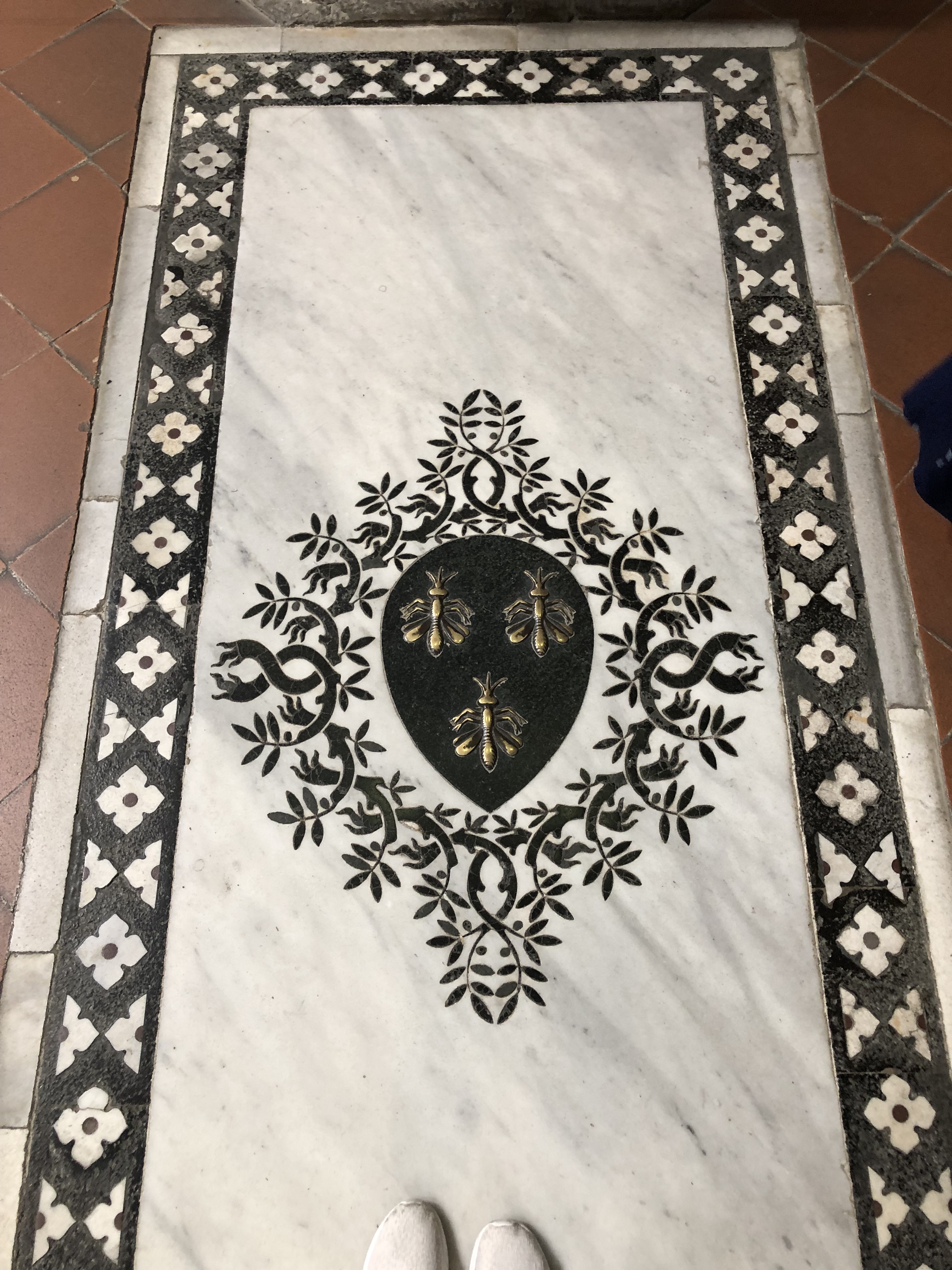
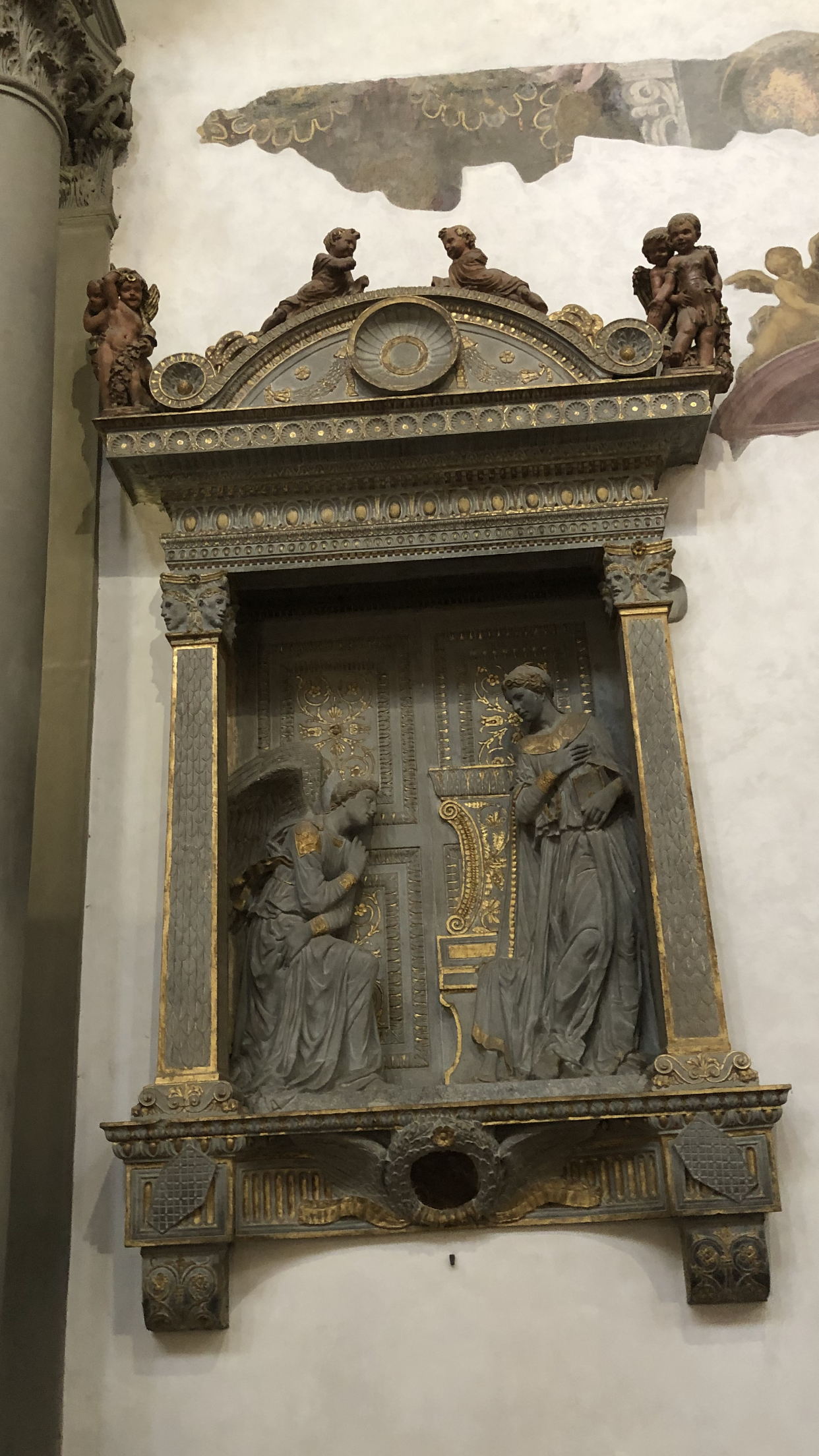
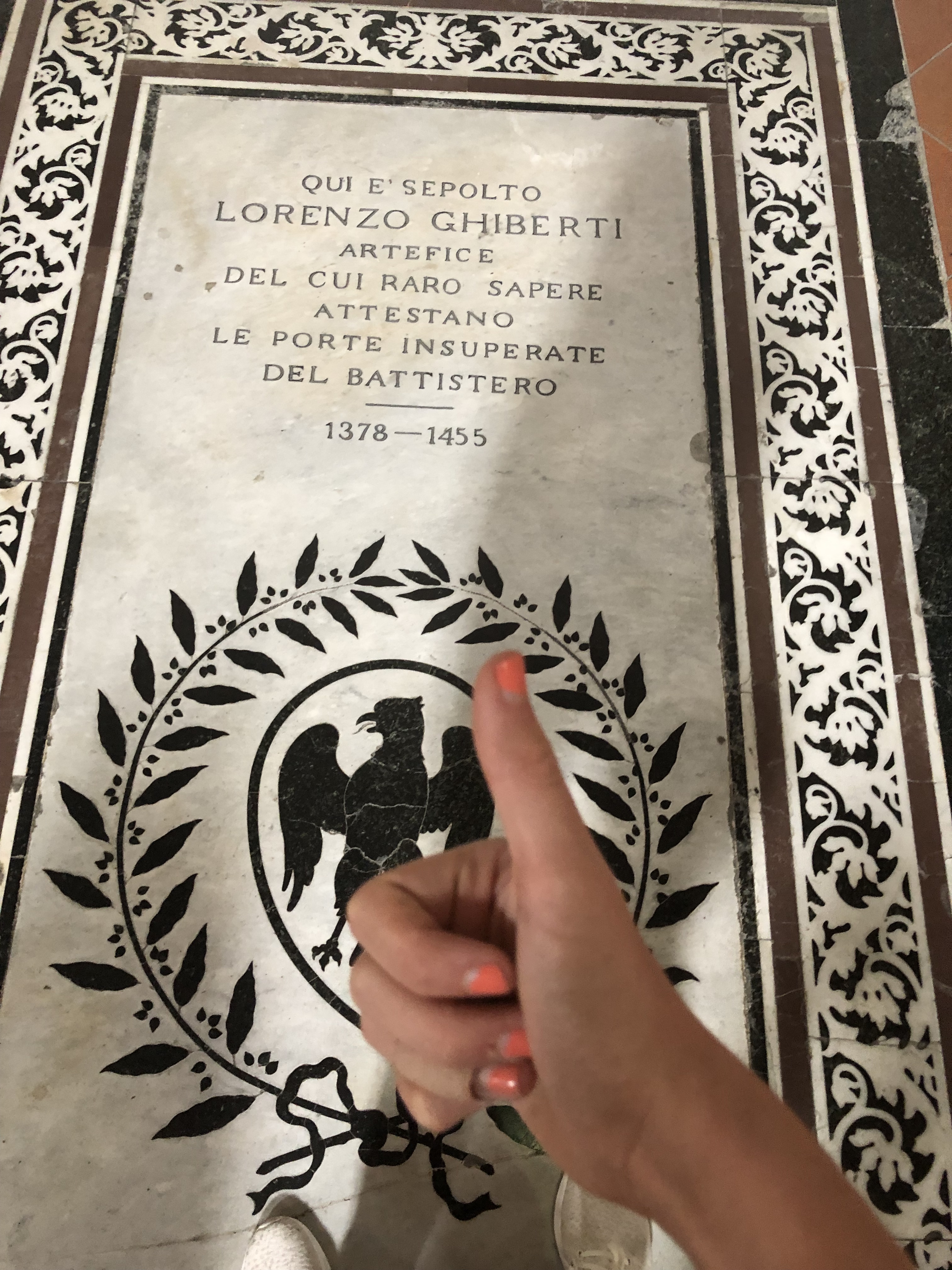
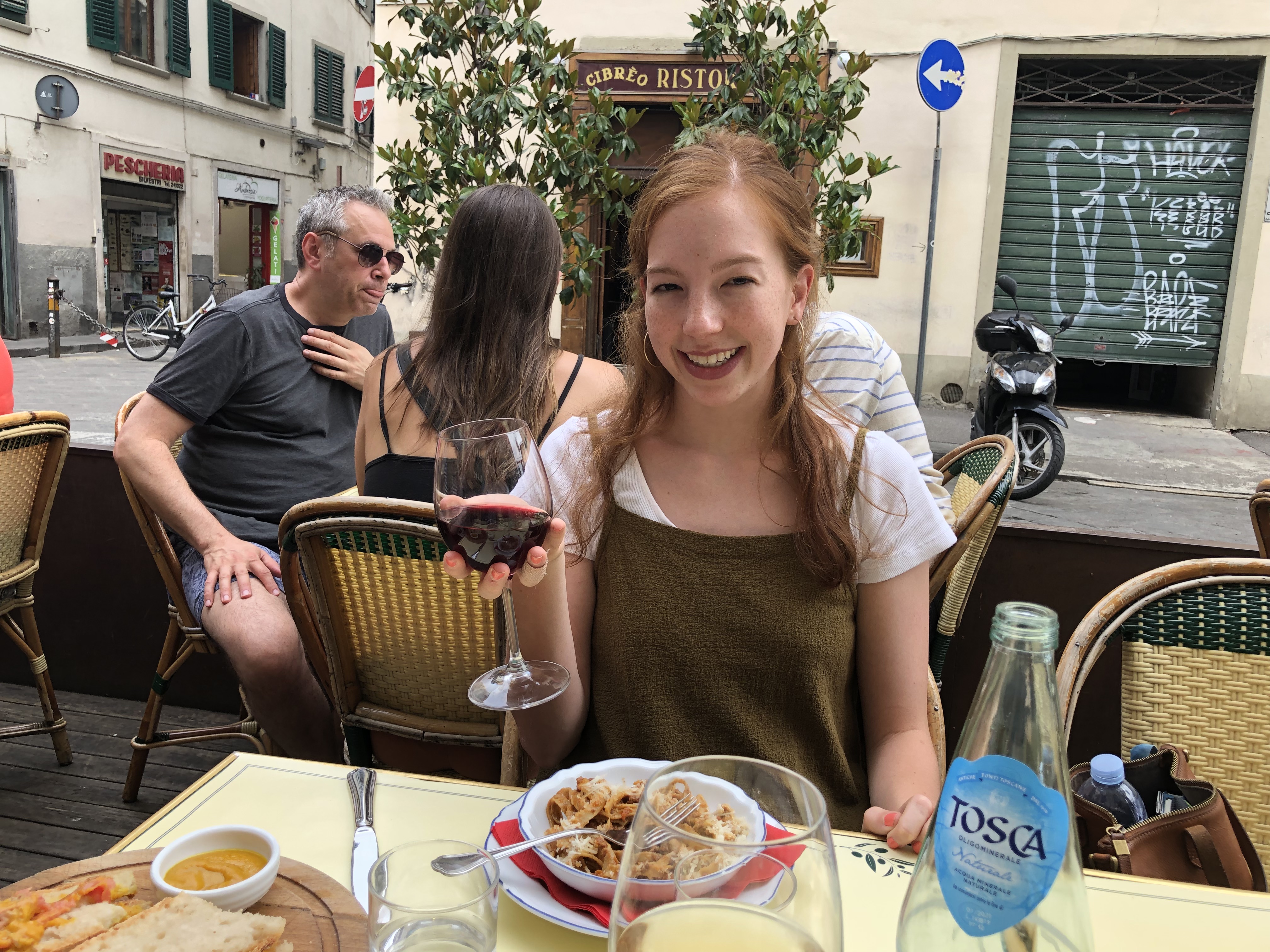
The day in Florence was filled with many triumphs, and several mistakes. First off, Florence has a different feel than Sansepolcro. Firenze is full of tourists, and the main Piazzi cater to the needs of Americans. There is ice cold water, menus in English, and an abundance of scams! At times it was frustrating to witness how unauthentic the tourists attractions were compared to the unapologetically Italian streets of Sansepolcro. In this time of cultural adjustment, it is difficult to balance the overwhelming sensation of the American and Italian culture clash, and Firenze tipped the balance. Feelings and stressors seemed to calm when we exited the main stretch and explored the art and monuments I researched. My fellow art students and I stuck together to visit Santa Croce, Casa Buonarotti, and Loggia dei Lanzi. What really stuck out to me were the gorgeous inlaid marble/stone graves on the floor of Santa Croce. There were lions, Barberini bees, skulls and crossbones, and we even saw and stepped on the grave of Lorenzo Ghiberti. Finding our independent museums and churches without the help of our Professors was a lot easier than I had expected, but I had to consult a dorky map at times. It is hard to grasp how much I saw yesterday. I saw so much art that I have studied, and even got to climb it (Cupola di Duomo). At pranza I enjoyed homemade tagliatelle pasta with ragu and an incredible glass of chianti. Pranza at Cibreo Caffe made up for the 8 euro gelato that was actually ice cream I purchased.
The biggest lesson I learned other than pull out more cash, was about the train station. We arrived in Florence with a ticket to return to Arezzo where we could choose our train. We had the same type of ticket to catch a bus from Arezzo to Sansepolcro. We had planned to take the 19:13 train to Arezzo, but instead caught the 19:22 regionale train to Arezzo. A kind woman on the train with us warned about how many stops the regionale has, and she hadn’t lied to us. During all of the stopping and starting, we missed our bus and had to order a taxi. When we were swept off the train and the conductor even left, we knew we had made it to the end of the line, Arezzo. Francesco drove us back to Sansepolcro, only running one red light and for a lovely fee of 64 euro. As we arrived back into Sansepolcro and “La Scorpione” was in sight, “Sweet Home Alabama” began playing on the radio. After a long day in Firenze and every small town between there and Arezzo, we had made it home.
https://www.visittuscany.com/en/attractions/loggia-signoria/
http://www.museumsinflorence.com/musei/museum_of_opera_s_croce.html
Guide to the Basilica of Santa Croce, Francesco Vossilia, 2015, SCALA.
 Caroline's Blog
Brava, Caroline! Hai finito tutta quella pasta? Prof.
LikeLike