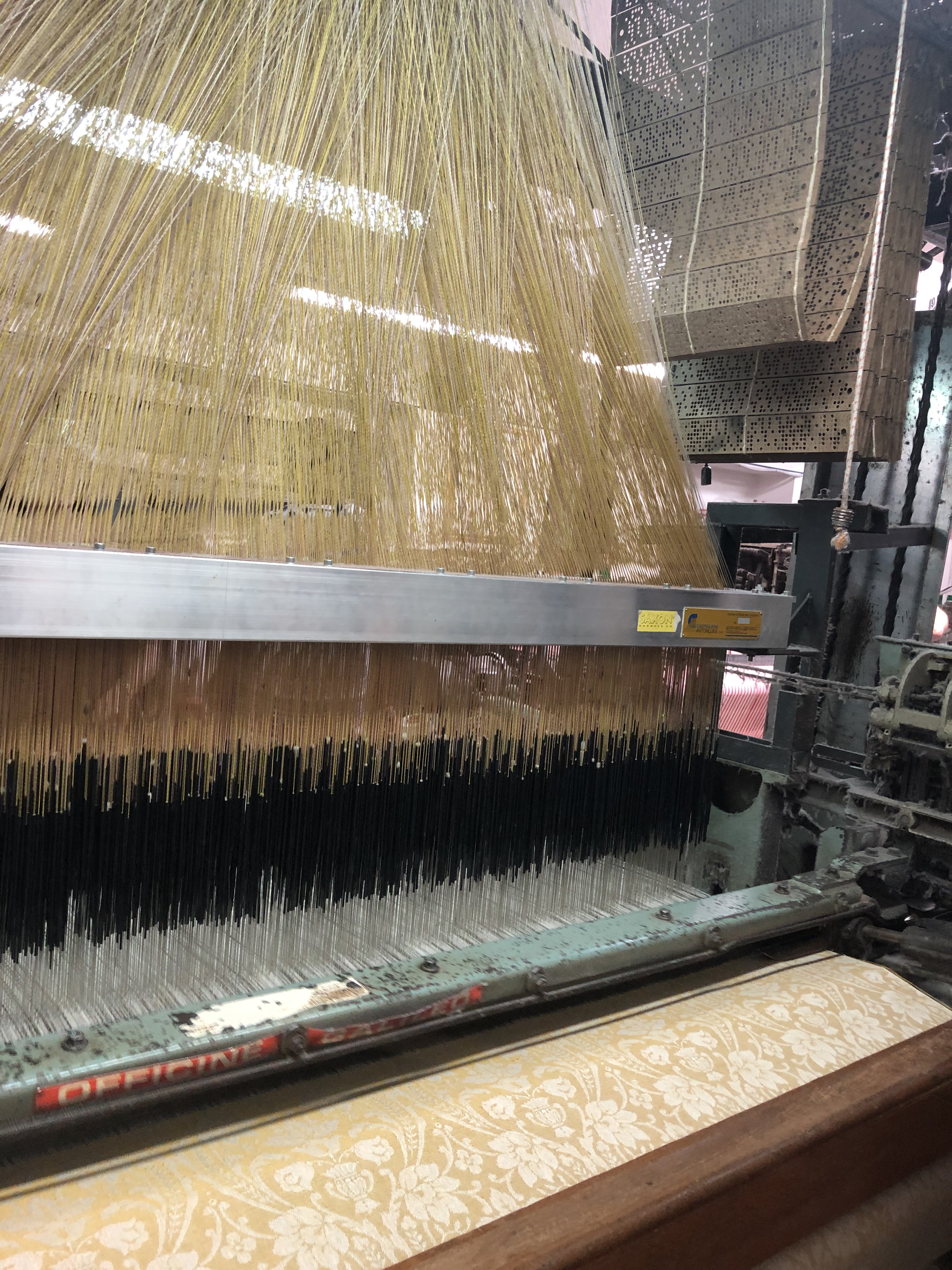
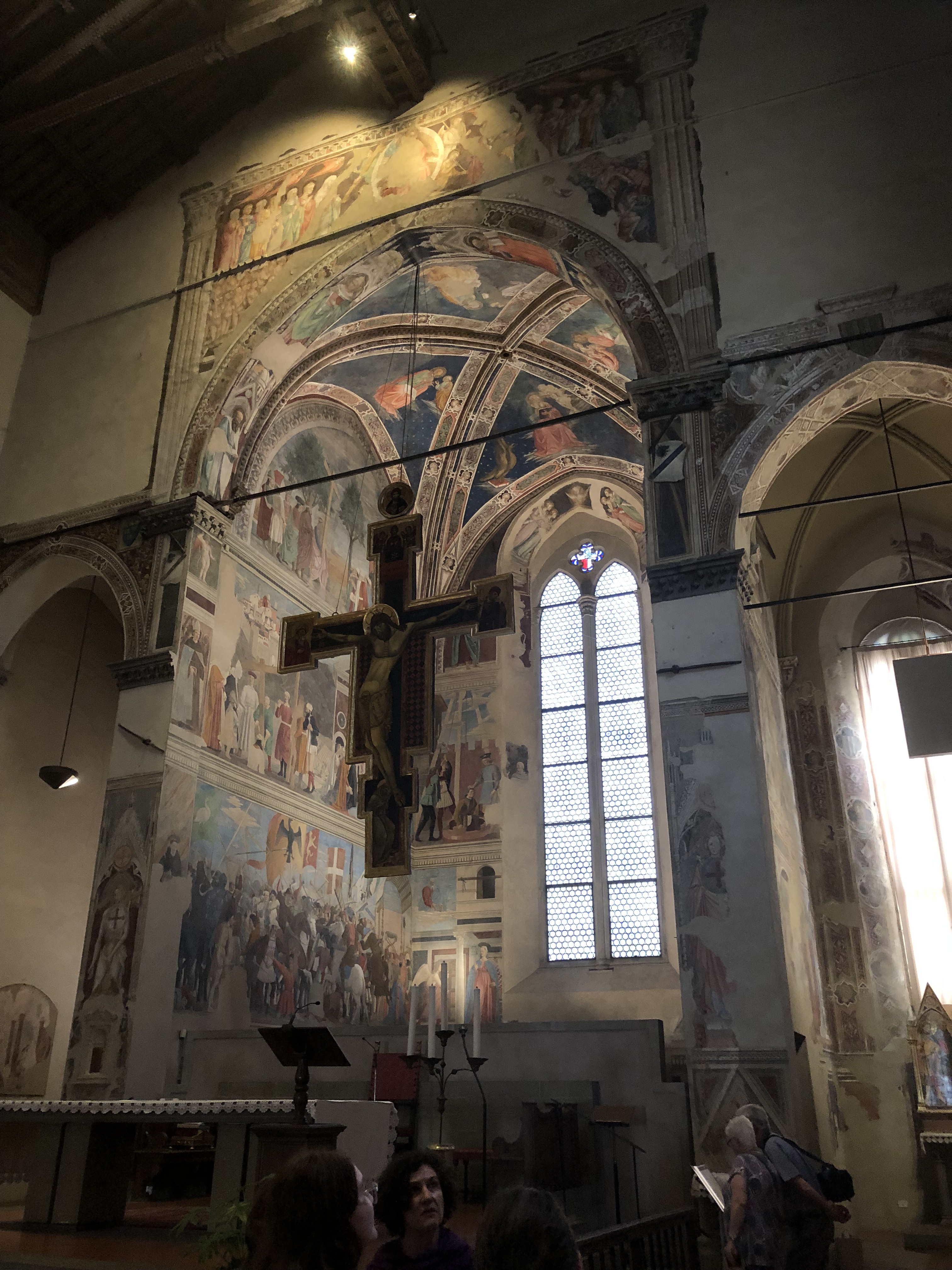
On il 12 giugno, my classmates and I headed to Anghiari and Arezzo after our morning classes. The first stop, Anghiari, is a medieval village that is enclosed by it’s 13th century walls. Inside the powerful walls of Anghiari, we went to the Busatti showroom and viewed their array of automatic looms downstairs. The rhythm of the reeds smashing the warp, the clicks of the punch cards, and the rattling of the heddles created a sympathy of weaving that I have never heard before. I didn’t purchase anything, but I enjoyed seeing the workshop! Next we headed to Arezzo, another hilltop Tuscan town, that is known for its wealth. When we traveled to Arezzo we were especially interested in The Church of San Francesco, which holds Piero della Francesca’s fresco, La Leggenda della Vera Croce/The Legend of the True Cross. To prepare for our excursion to The Church of San Francesco, each of us in class were assigned a scene in Piero della Francesca’s fresco to study and present about at the church. The Church of San Francesco was built in the thirteenth century and finished in the fourteenth, and only has one nave. Other than the Piero della Francesca frescoes in the Bacci chapel, there is a gorgeous crucifix and stained glass windows. I was assigned the lunette at the top right of The Legend of the True Cross entitled Death of Adam of 1466.
The frescoes in the La Leggenda della Vera Croce tell the story of the True Cross, but out of order, which makes the eye dance from panel to panel in order to follow the story. The Death of Adam is the beginning fresco and is positioned in the top right hand corner. The Death of Adam is opposite to the lunette painting The Exaltation of the Cross, which is the ending scene of the legend, creating a sense of change from the right to the left side of the chapel. The Death of Adam depicts three important scenes from Adam’s death. The first scene which is on the far right side of the fresco shows Adam laying on the ground, being comforted and surrounded by his children. He has asked one of his sons, Seth, to meet with the Archangel Michele to beg for the gift of mercy which was in the form of an oil. In the background this meeting between Seth and the Archangel can be seen, which is the next stage of the story. Seth is given a seed instead to put in his dying father’s mouth that will grow into the tree of sin, this is the only way Adam will receive forgiveness. On the far left is the final scene where Adam has been buried by his family and the tree of sin has bloomed behind them. The two farthest figures to the left are King Soloman and the Queen of Sheba who have realized that the tree of sin will be used to construct the Holy Cross, and even though the wood was currently a bridge, Soloman wants it buried.
Piero della Francesca’s approach to telling the story of Adam’s death in three stages across the lunette was mimicking the way narratives and stories were told in other frescoes of the time. By placing the middle scene in the background, there is a split between the scenes, and depth is created. By placing the secret scene between the Archangel Michele and Seth in the background, secrecy is created and it becomes clear that Adam has no control over his fate, even in the afterlife. The tree of sin fills up the whole top half of the scene, towering over the horizontal composition of figures, showing its power, and that the fate of the cross was stronger than any mortal. Humankind is on one level, and Christ was on another. The figures in the different scenes create a triangle shape, which represents the holy trinity and is a geometric shape that Piero della Francesca loved.
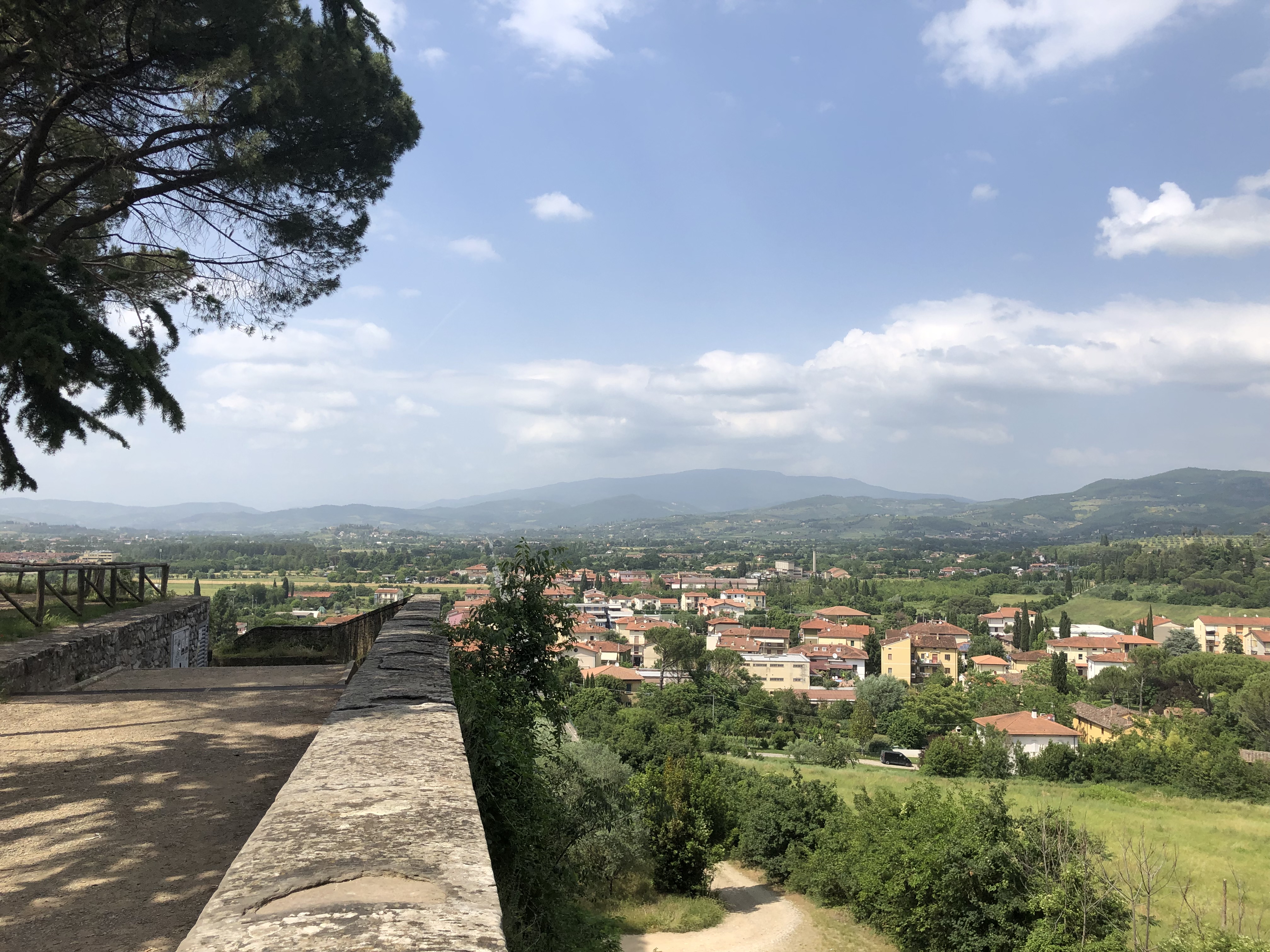
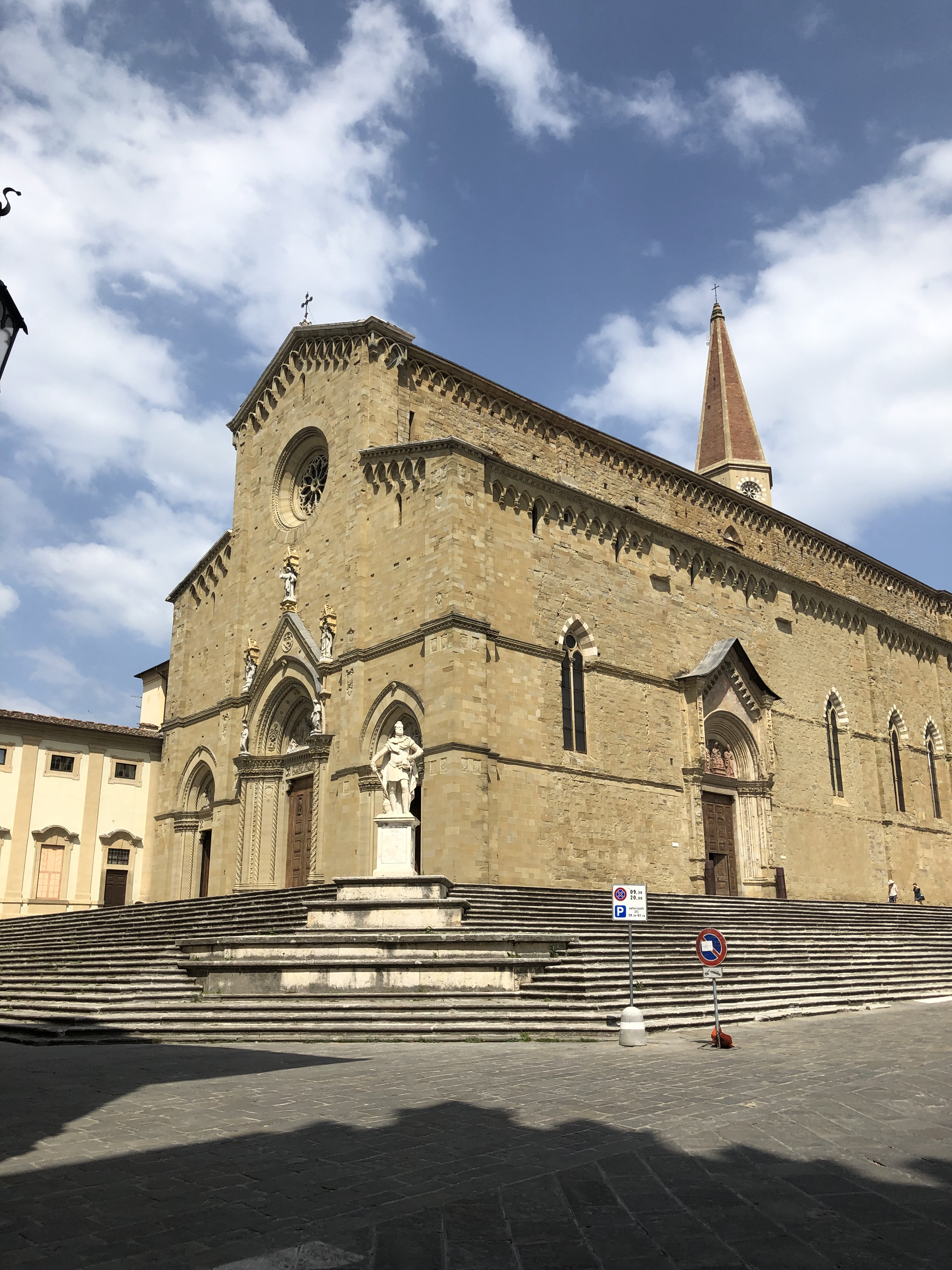
It was a gorgeous, hilly day in Anghiari and Arezzo. There were incredible views of Tuscany and gorgeous buildings and Piazzi. The bus ride back to Sansepolcro went smoothly this time, and I felt in control of my travel today, except for the time when an older woman followed my friend Tori and I, asking us to come into her home and be her “compagne”! When in Arezzo! As we scurried away from our lonely pal, we saw there was a wedding at the Cattedrale and we watched the bride emerge in a rose gold car to walk into the church. We then went inside the church and saw the decorative side chapel, that we believe was Baroque, illuminated by tiny lit candles. Then we went to the church of Santa Maria del Piove which was older than the other churches and had an area under the high alter with reliques and a wall tomb. I wandered into some gorgeous churches and saw some incredible relics, but the highlight of the day was seeing The Legend of the True Cross and getting to present my assigned fresco to our group, and whatever bystanders were lucky enough to get a free tour. The security guard was not impressed, and decided to kick us out of the chapel for ten minutes because we had overstayed our welcome. No worries, we got to go back inside and finish studying the frescoes! This was my first time explaining a piece of art to a group of people while standing in front of it, and I am really proud of myself for doing it.
We made it back to Sansepolcro at last and got that warm tingly feeling of coming home when we saw the walls of the city. It wouldn’t have been a Sansepolcro welcome without the poor woman being loaded into an ambulance by the bus stop. She seemed conscious on her stretcher, but her face had seen better days, and so had her bike. It’s a good thing we learned what “attenzione” means.
 Caroline's Blog
Caroline Sei a Viareggio? Prof
LikeLike